I am a PhD student in Communication and Media at the Institute of Communication Research at the University of Illinois Urbana-Champaign. I hold the MA Degree in the department of Media, Culture, and Communication from New York University and the BA degree from the University of International Relations. I am interested in the global media industry, China studies, and game studies. I cooperate with marketing and consulting companies in the UK and China to make the entertainment industry reports and game industry reports, helping entertainment or game companies to know the dynamics of media industry in Chinese context and global context.

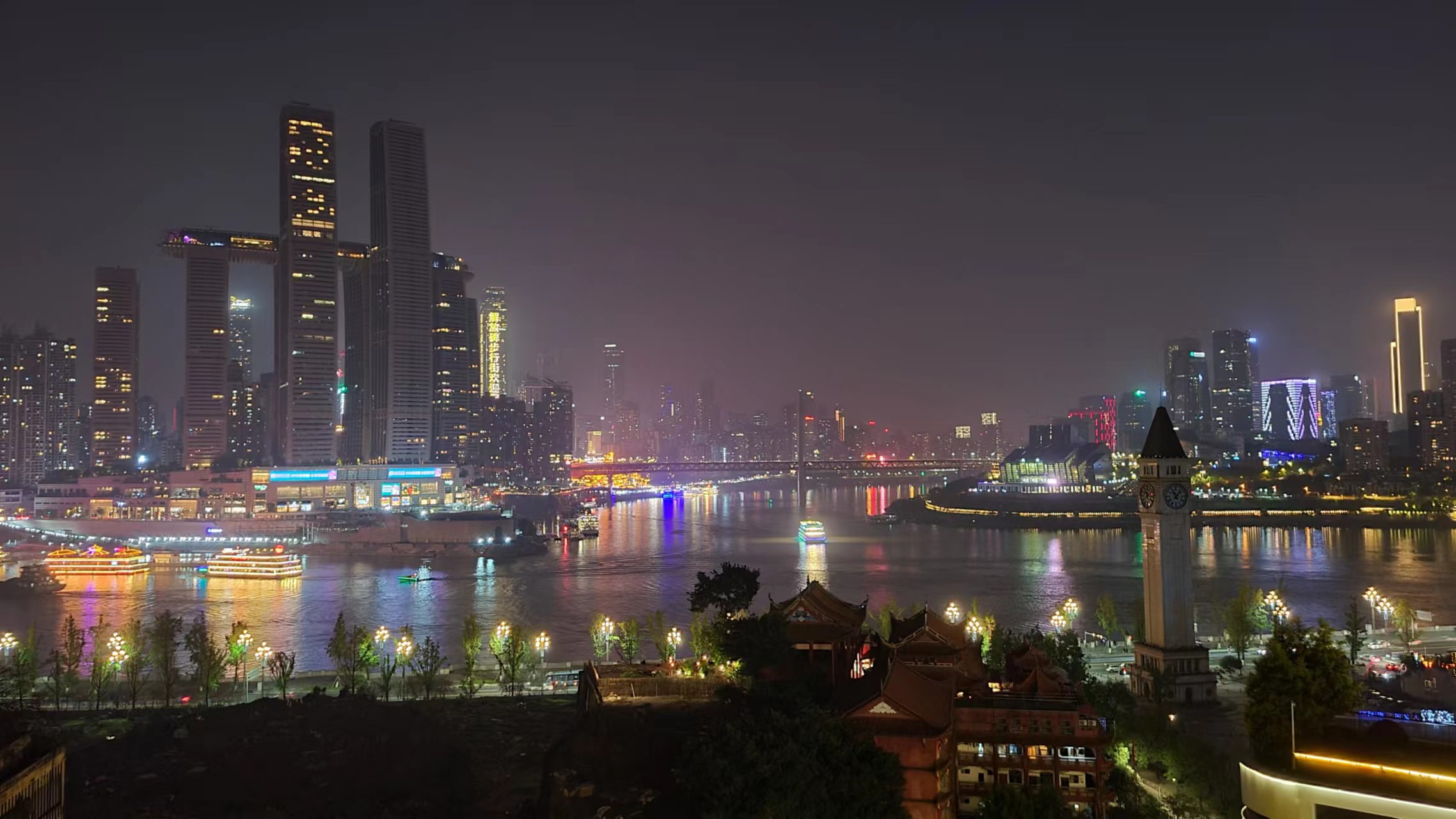
Futuristic
I was born and raised in Chongqing, one of the most futuristic cities in China. Known for its dramatic skyline, Chongqing boasts a blend of ultra-modern skyscrapers and traditional architecture, creating a unique urban landscape. The city features numerous skyscrapers, sky pedestrian bridges connected to residential buildings, train tracks passing through buildings, and playgrounds and roads on building rooftops. Growing up in this futuristic environment has made me imaginative, creative, resilient, open-minded, and passionate about uncertainty.
My pursuit of infinite possibilities led me to the world of games, the most futuristic form of media. To me, games represent the pinnacle of human imagination, combining music, imagery, text, and other elements to create worlds full of limitless potential. In these worlds, people can freely experiment with different lives, explore new interpersonal relationships, and envision new social structures, which is truly exhilarating. If games were solely for entertainment, it would diminish their futuristic potential. The role and impact of games are still full of endless possibilities, and by integrating emerging technologies, I aim to explore their even more futuristic significance and forms.


Humanistic
Games, as one of the most futuristic media, have been with us for half a century. Beyond nurturing a host of gaming companies, how much have they truly transformed our world? While games strive to create virtual realms that seem detached from reality, they are deeply intertwined with our real-world society. Both in their consumption and production, games still reflect significant inequalities in gender, age, race, and region. If we focus solely on the stunning graphics, fluid character movements, intricate facial expressions, and the smiles of middle-class players, we miss the “sweat and tears” in game factories, the digital divide behind gaming consoles, and the exploitation by game companies of both players and developers.
One of my favorite quotes is from the Chinese writer Lu Xun: “The infinite distance and countless people are all related to me.” This resonates deeply with my belief in the interconnectedness of all people. I care about the adults playing console games in bustling cities and the children playing mobile games in remote villages. I am concerned about the underrepresentation of women and people of color in gaming companies and the struggles of queer games in the market. Games should not be mere pastimes for a privileged few nor just money-making machines for corporations. This conviction fuels my passion to explore the history and formation of the gaming industry and to uncover the power dynamics that shape it. Games, with their boundless potential, should be inclusive and transformative, serving as a beacon for creativity and equality in our ever-evolving society.

 Nansong Zhou 周楠淞